
The Connection Between Hormonal Health and Mental Well-Being
If you've ever felt out of sorts—tired, anxious, moody, or foggy—without any clear explanation, your hormones could be the missing piece of the puzzle. Hormonal health isn’t just about physical functions like metabolism and reproduction; it plays a direct and powerful role in mental and emotional well-being.
At Well3, we see this every day. When hormone levels are balanced, our clients often report feeling like themselves again—more clear, calm, motivated, and emotionally stable.
Here’s how hormones influence your mental health—and what you can do if something feels off.
How Hormones Affect the Brain
Hormones are chemical messengers that travel throughout the body, including to the brain. They help regulate:
Mood and motivation
Memory and focus
Sleep and energy
Stress resilience
Sexual desire and satisfaction
When even one hormone is out of balance, it can disrupt these systems and lead to mental and emotional distress.
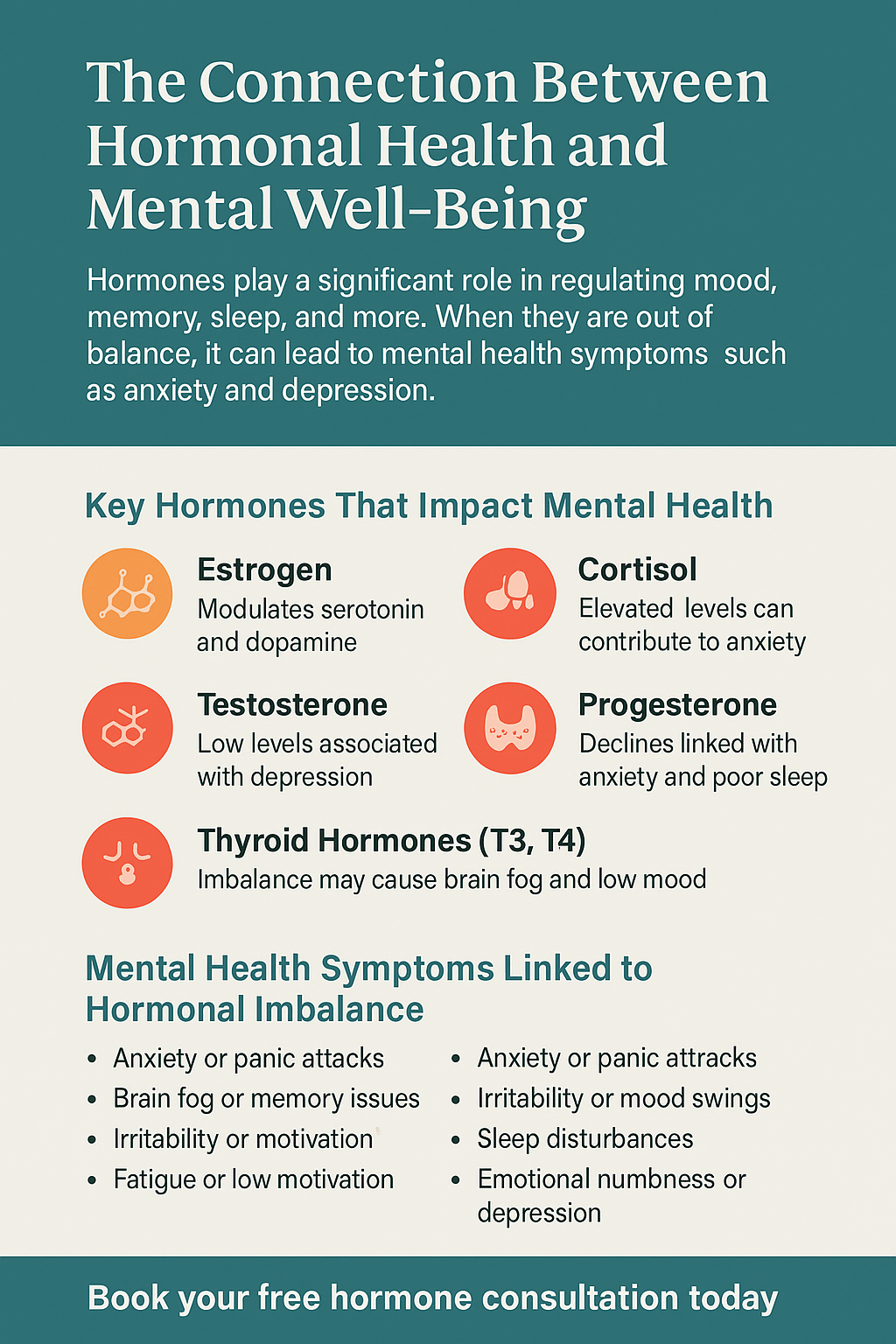
Key Hormones That Impact Mental Health
1. Estrogen (in all genders)
Estrogen helps modulate serotonin and dopamine—two major mood-related neurotransmitters. Low estrogen can lead to anxiety, depression, and irritability (common during menopause or after childbirth).
2. Testosterone
Low testosterone is linked with fatigue, apathy, low motivation, and even depressive symptoms in both men and women.
3. Cortisol
Known as the "stress hormone," chronically elevated cortisol can lead to anxiety, irritability, and poor sleep. When it crashes, it can mimic depression and fatigue.
4. Thyroid Hormones (T3, T4)
Thyroid imbalance is a common but often overlooked cause of brain fog, low energy, and mood instability.
5. Progesterone
This calming hormone supports sleep and emotional regulation. Drops in progesterone can lead to PMS, insomnia, and heightened anxiety.
Mental Health Symptoms Linked to Hormonal Imbalance
Anxiety or panic attacks
Brain fog or memory issues
Irritability or mood swings
Fatigue or low motivation
Sleep disturbances
Emotional numbness or depression
If these symptoms persist despite efforts to eat well, exercise, or manage stress, it’s worth considering hormone testing.
You Deserve to Feel Like Yourself Again
Mental wellness isn’t just in your head—it’s in your hormones too. If something feels off, it’s not just “stress” or “aging.” It’s something that can be tested, understood, and supported.
#HormonalHealth #MentalWellBeing #HormoneBalance #MoodAndHormones #ThyroidHealth #EstrogenSupport #TestosteroneHealth #AnxietyRelief #DepressionSupport #Well3Care #BioidenticalHormones #HormoneTherapy