
Building Resilience: Lessons from Zebrafish Studies on Ketamine and Stress Response
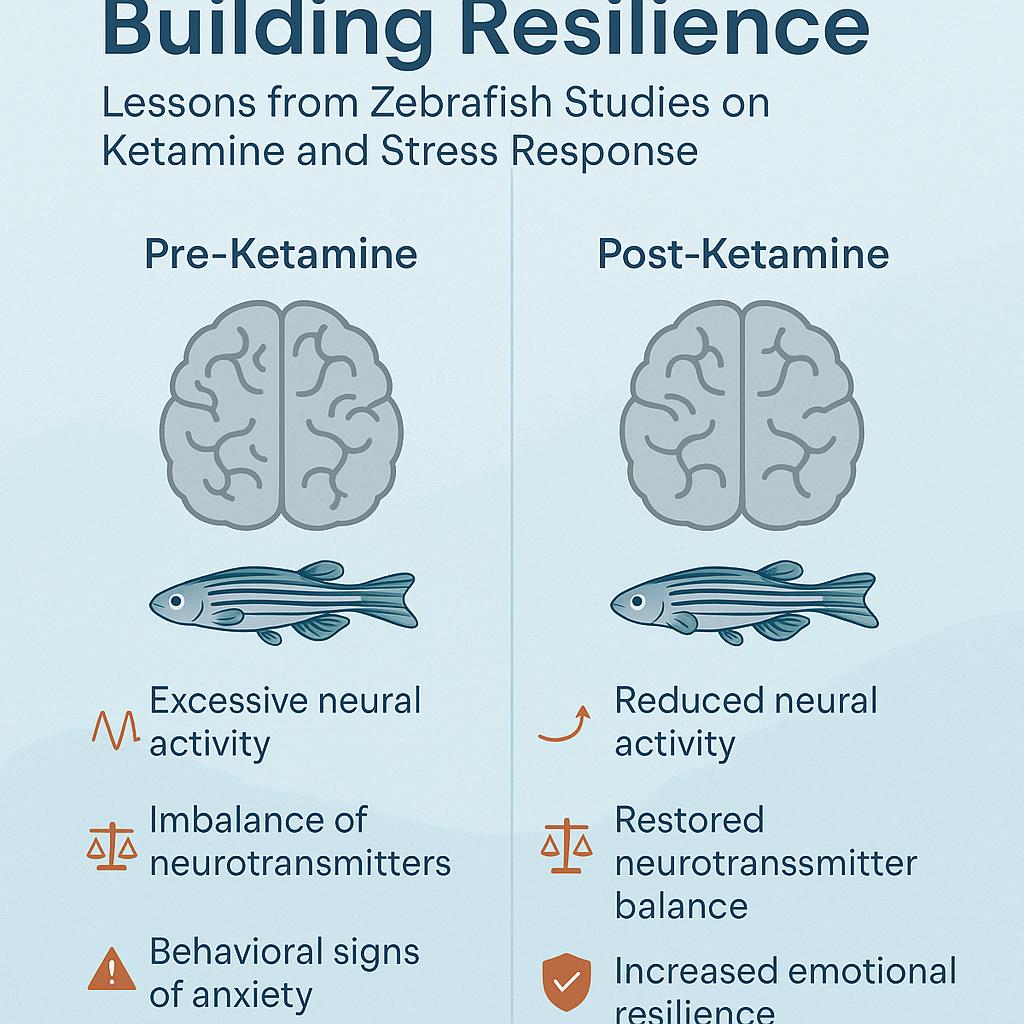
When we talk about ketamine’s ability to reduce depression and anxiety, the focus is usually on humans—and for good reason. But fascinating insights are also coming from an unlikely source: zebrafish.
These tiny aquatic creatures are helping scientists uncover how ketamine works at a neurological level to restore calm, reset the stress response, and build emotional resilience. And what we’re learning from them could have big implications for how we treat stress-related disorders in people.
Let’s dive into why zebrafish matter—and what they’re teaching us about ketamine’s role in healing the brain.
Why Zebrafish?
Zebrafish are a favorite in neuroscience research because they’re genetically similar to humans in many key ways:
70% of human genes are shared with zebrafish
Their brains develop rapidly and are easy to observe
Their stress responses mimic human anxiety pathways
They respond to medications like ketamine in measurable, trackable ways
This makes them ideal for studying how different drugs affect brain function and behavior.
What the Research Shows
Recent studies have shown that ketamine can reverse stress-induced brain changes in zebrafish, including:
Restoring balance in neurotransmitters like glutamate and GABA
Reducing excessive neural activity linked to anxiety and panic
Promoting neurogenesis (the growth of new brain cells)
Enhancing behavior that indicates emotional flexibility and resilience
In other words, ketamine doesn’t just dull symptoms—it appears to retrain the brain’s response to stress at a cellular level.
Translating Fish Findings to Human Healing
So what do zebrafish have to do with your anxiety or burnout?
A lot, actually. Human studies show that ketamine works similarly by:
Interrupting destructive thought loops
Creating space for new, healthier perspectives
Supporting long-term emotional regulation
Helping people feel calm, clear, and connected again
At Well3, we view ketamine not as a last resort, but as a catalyst for resilience and transformation—and the science backs it up.
How We Use This Knowledge at Well3
Inspired by both human and animal research, we design ketamine programs that:
Prioritize integration and reflection after sessions
Tailor frequency and dosage to your nervous system
Use tracking tools to measure shifts in stress response over time
Support the full mind-body connection, not just symptom relief
We don’t just want you to feel better—we want you to bounce back stronger.
Curious About Ketamine and Resilience?
We’re here to answer your questions and create a program that supports deep, lasting healing—not just short-term relief.
👉 Schedule your free consultation
#KetamineResearch #Neuroplasticity #StressRelief #EmotionalResilience #ZebrafishStudy #KetamineTherapy #MentalHealthScience #Well3Care #BrainHealing #InnovativeTherapies